

Prolotherapy for Joint Pain and Injuries
What Is Prolotherapy?
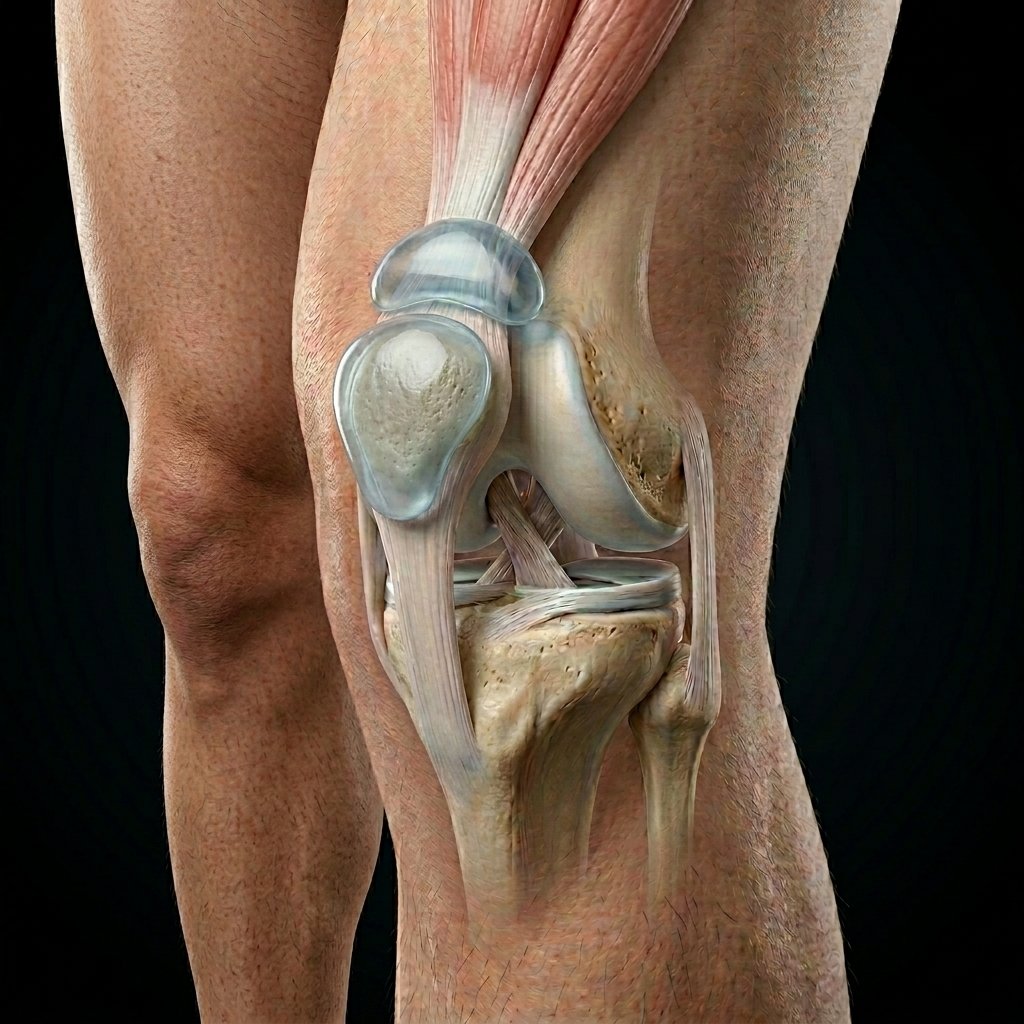
Prolotherapy is an injection-based treatment for joint pain and musculoskeletal injuries and has been around for nearly 100 years. Despite that, it remains one of the most underutilized tools in medicine. The idea is simple: by injecting a solution of concentrated dextrose (sugar water), saline (salt water), and lidocaine (a numbing agent) directly into damaged ligaments and tendons, we trigger your body's own repair process. No surgery. No steroids. Just your body, doing what it was designed to do.
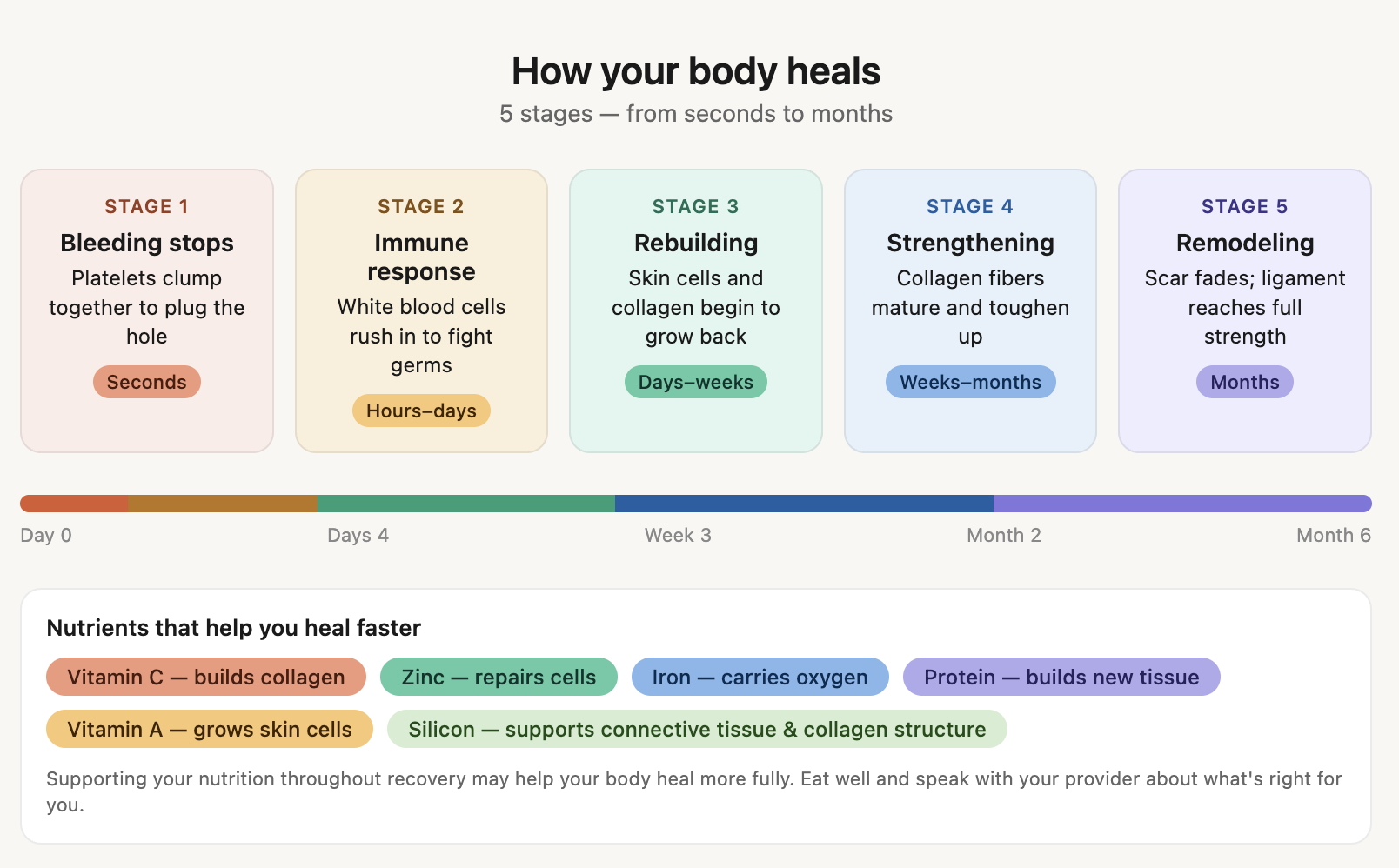
Here's why that matters. When you sprain an ankle, tear a ligament, or develop chronic joint pain, the body attempts to heal but it doesn't always finish the job. The collagen it lays down is often weaker and less organized than the original tissue, leaving behind what we call laxity, or looseness. That's why a joint that was "just a sprain" never quite feels the same again. Prolotherapy picks up where that incomplete healing left off, stimulating fibroblasts, the cells responsible for building collagen, to come back to the site and do the job properly. The goal is tissue repair and remodeling, from the inside out.
How It Works
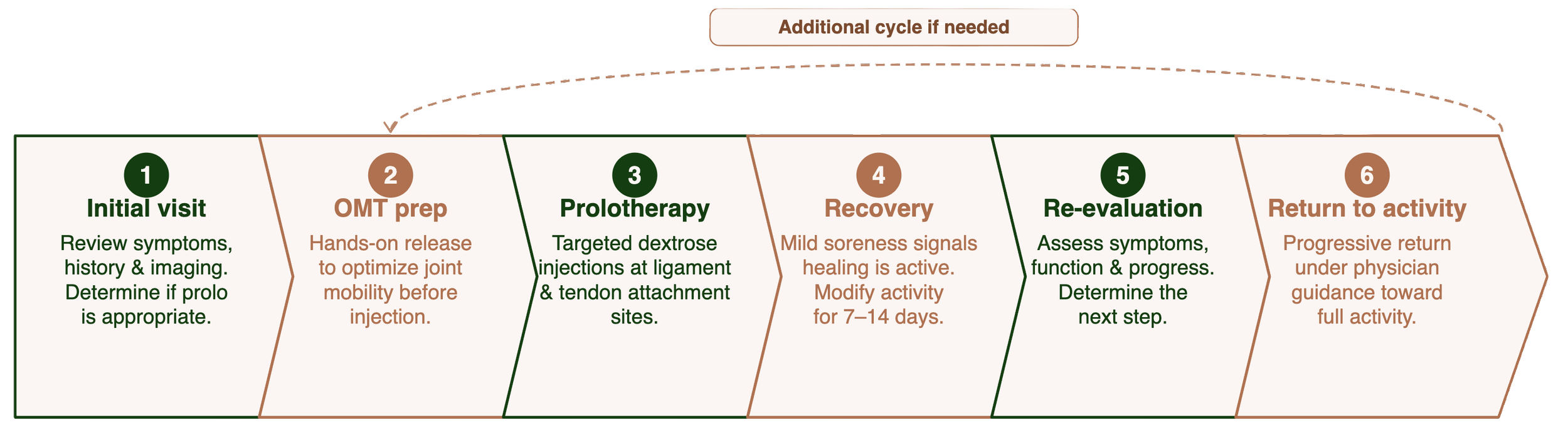
Before your first injection, I perform osteopathic manipulative treatment (OMT) to assess and optimize how the joint is moving. OMT is a hands-on technique unique to osteopathic physicians, where we use our hands to identify restrictions, release tension in the surrounding soft tissue, and restore proper joint mechanics. Think of it as making sure the joint is in the best possible position to receive treatment and heal. Most patients have never heard of it, and most leave wondering why it isn't standard practice everywhere.
Once the joint has been assessed and prepped, we move into the injection portion. The solution is delivered precisely into the weakened ligaments and tendons at their attachment points on the bone, creating a temporary, controlled inflammatory response. This isn't a bad thing because inflammation is your body's way of signaling that repair needs to happen. That signal recruits fibroblasts to the area, which begin synthesizing new collagen precursors to reinforce and rebuild the damaged tissue. No actual medications are used, just dextrose and lidocaine. The healing is entirely your own.
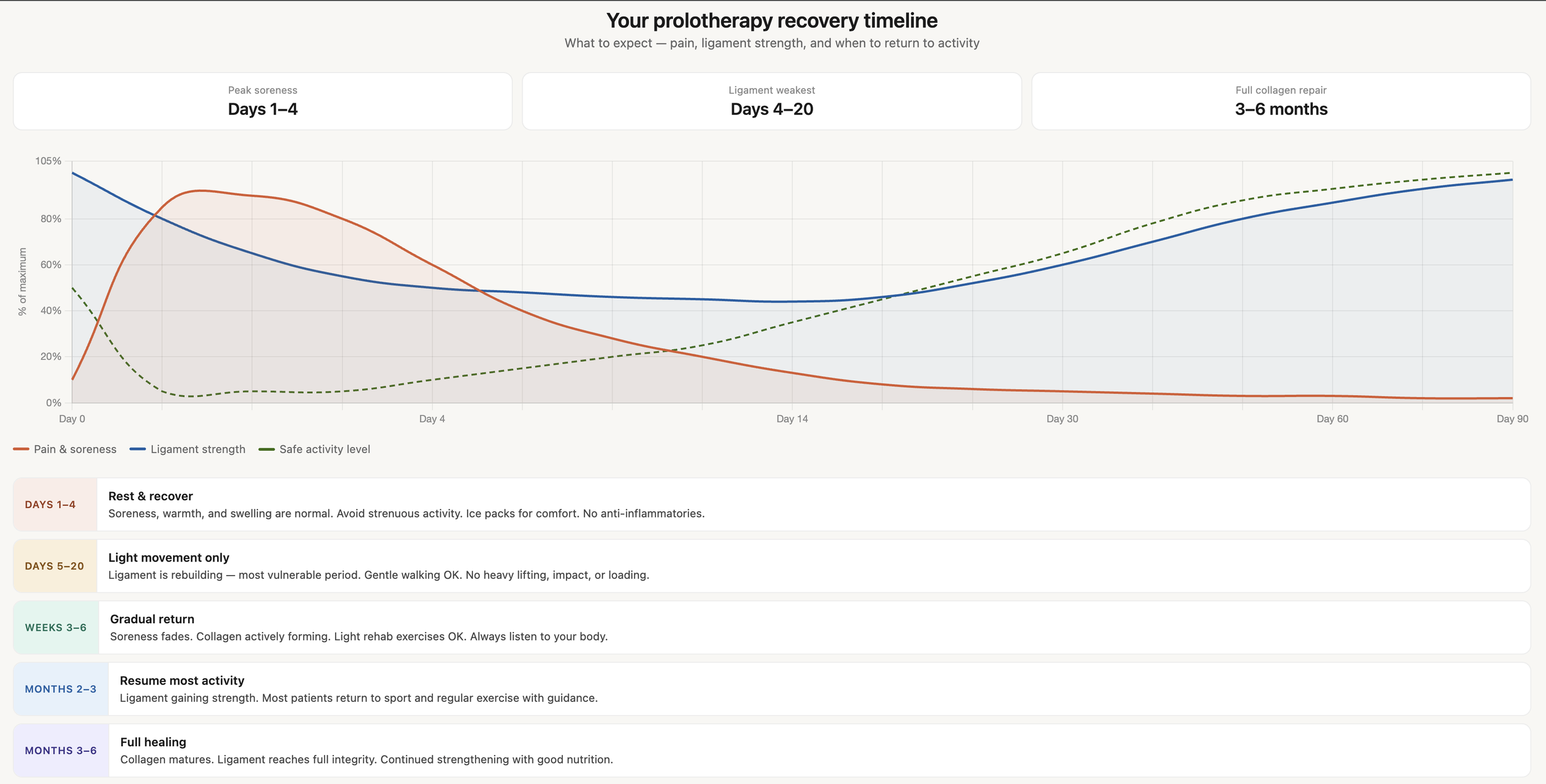
After your injection, the first 72 hours are important. You can go about your normal daily activities such as: walking, light movement, daily tasks. We ask that you avoid anything that loads the joint: weightlifting, running, yoga, jumping, or excessive stretching to truly give your body the opportunity to heal. You may feel mild soreness, which is actually a good sign that the process has started. Days 3 through 7, you may notice some heaviness or faint achiness in the area. That's normal, and the same activity restrictions apply.
After the first week, we begin a gradual return to activity such as: light load bearing, short distances of easy jogging, some weighted movements, as long as none of them cause pain. I'll walk you through exactly what that looks like before we ever do the first injection. Around week 2, we'll reassess and determine whether a repeat session is needed to continue building on the healing response. At follow-up visits, OMT may be used again to support the healing tissue, address any compensation patterns that may have developed, and make sure the joint is moving efficiently as the new collagen matures. Most patients see meaningful improvement after 3 sessions spaced 2 to 4 weeks apart. Once your final session is complete and a few weeks have passed, you should be well on your way back to the activities you've been missing.
Conditions We Treat
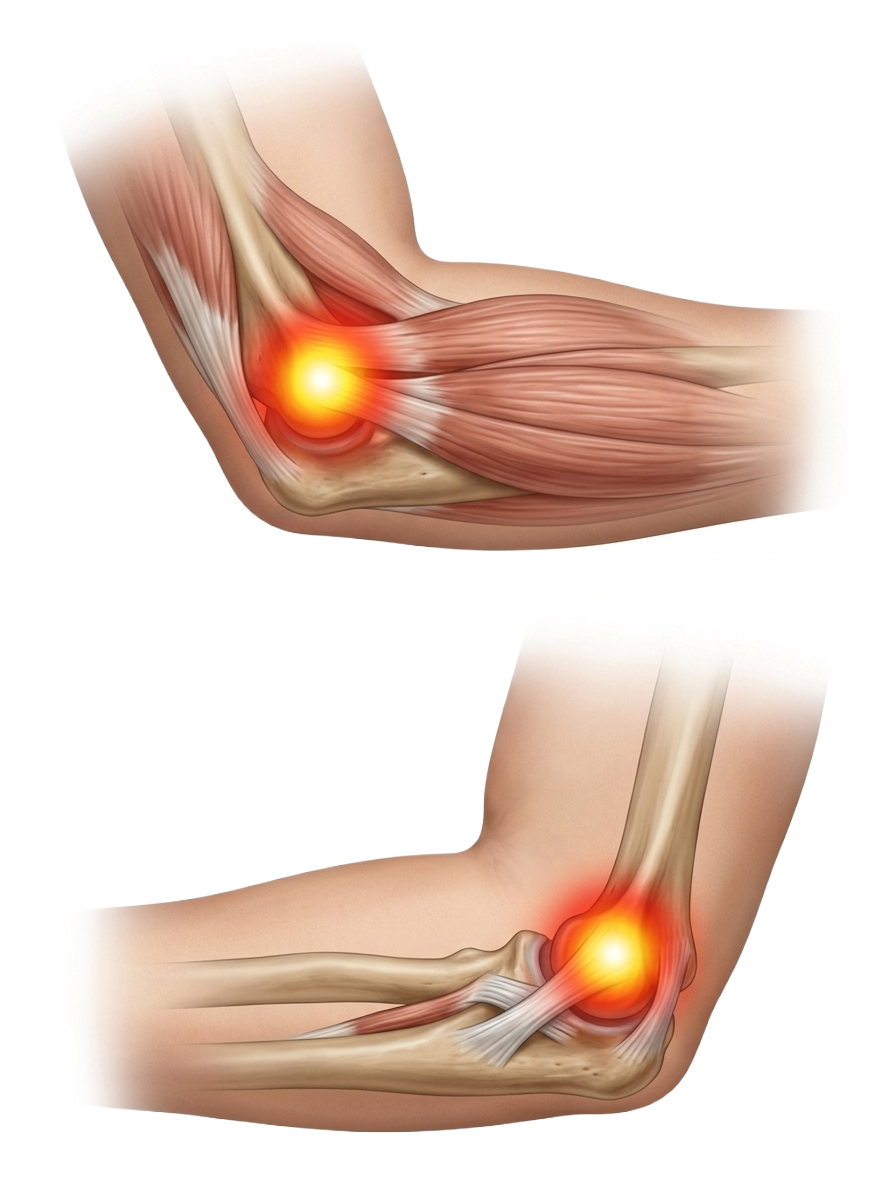
ELBOW
Lateral epicondylitis/tennis elbow, medial epicondylitis/golfer's elbow
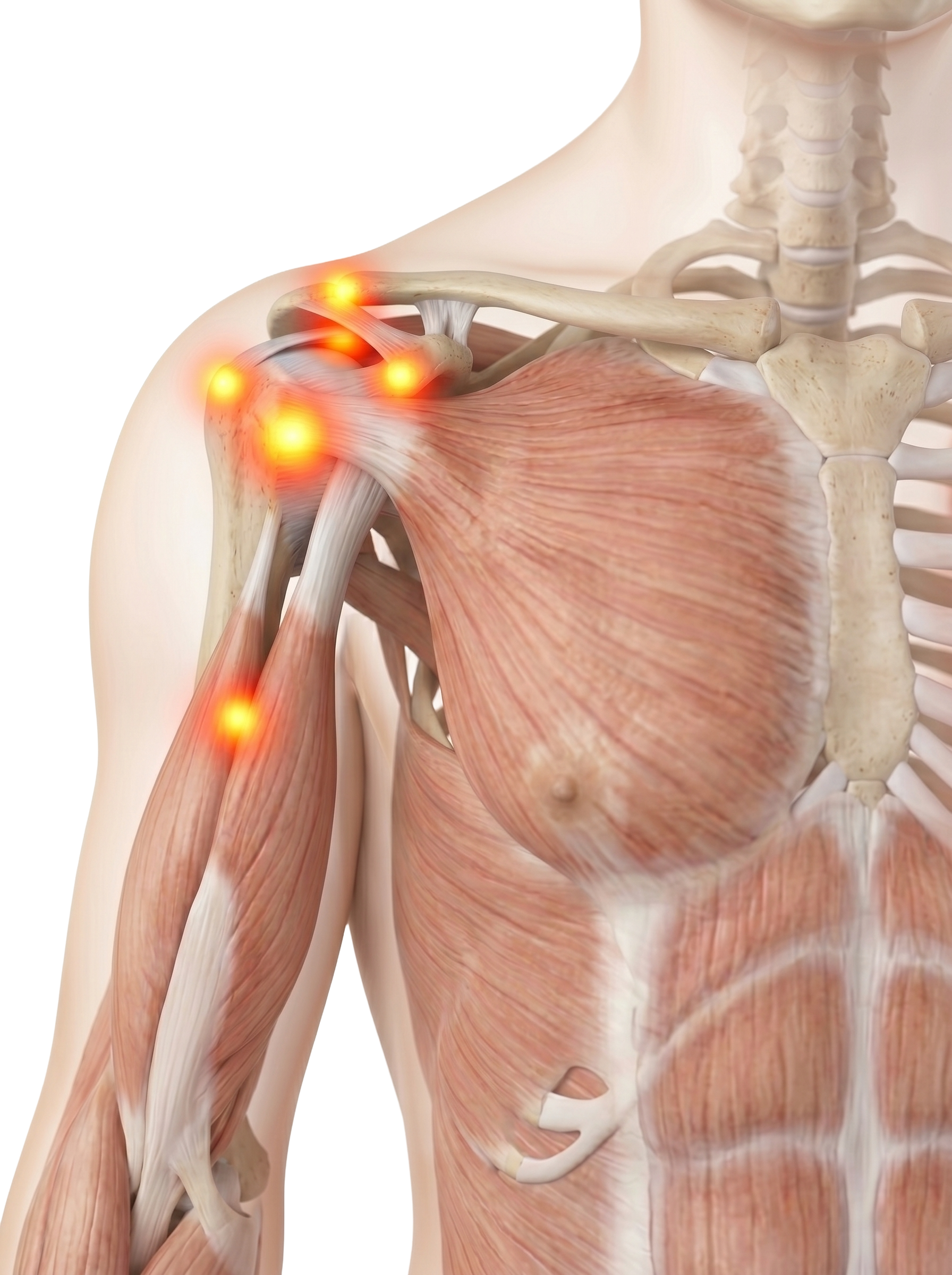
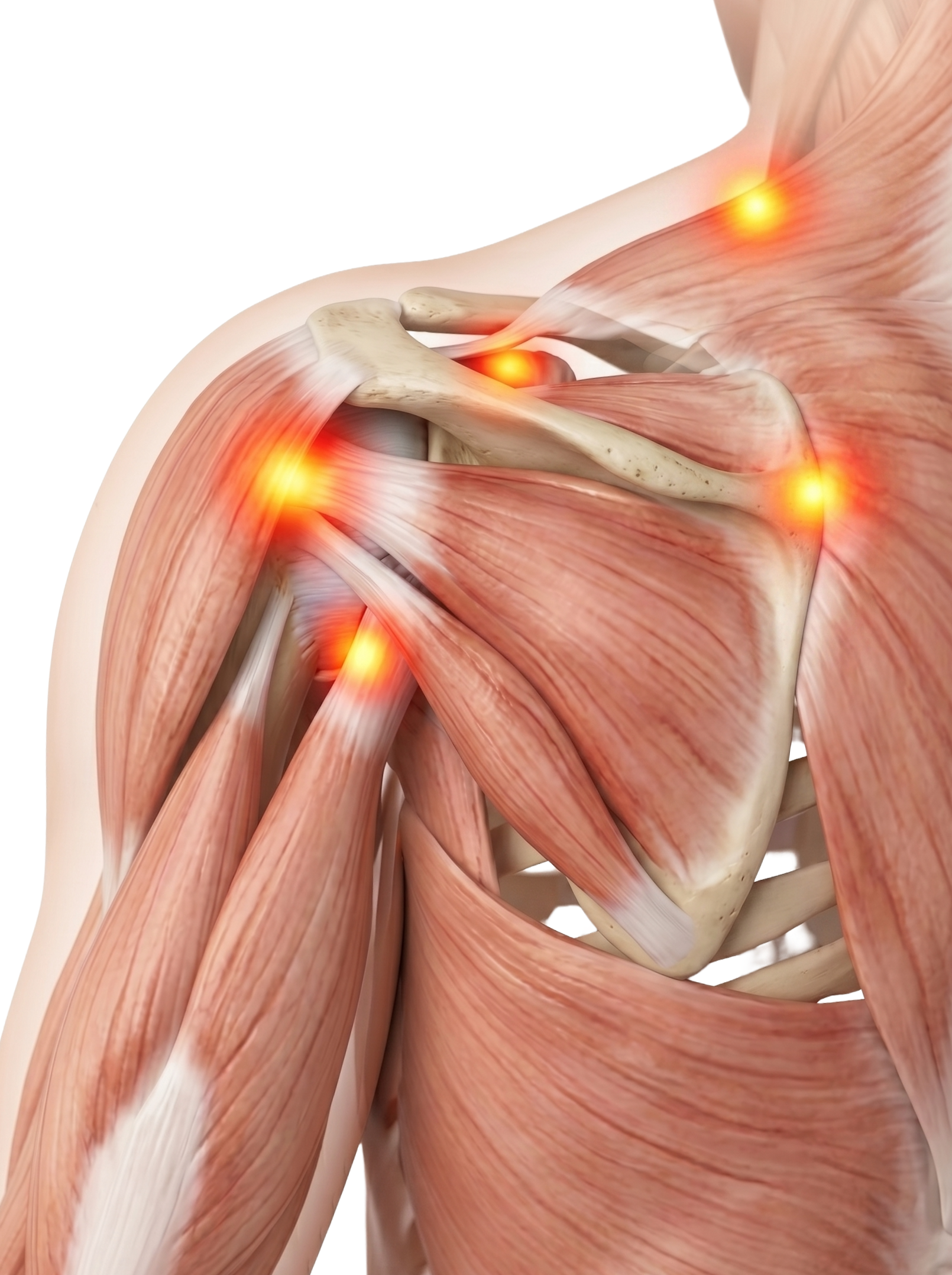
SHOULDER
Frozen shoulder, rotator cuff injuries, and shoulder instability
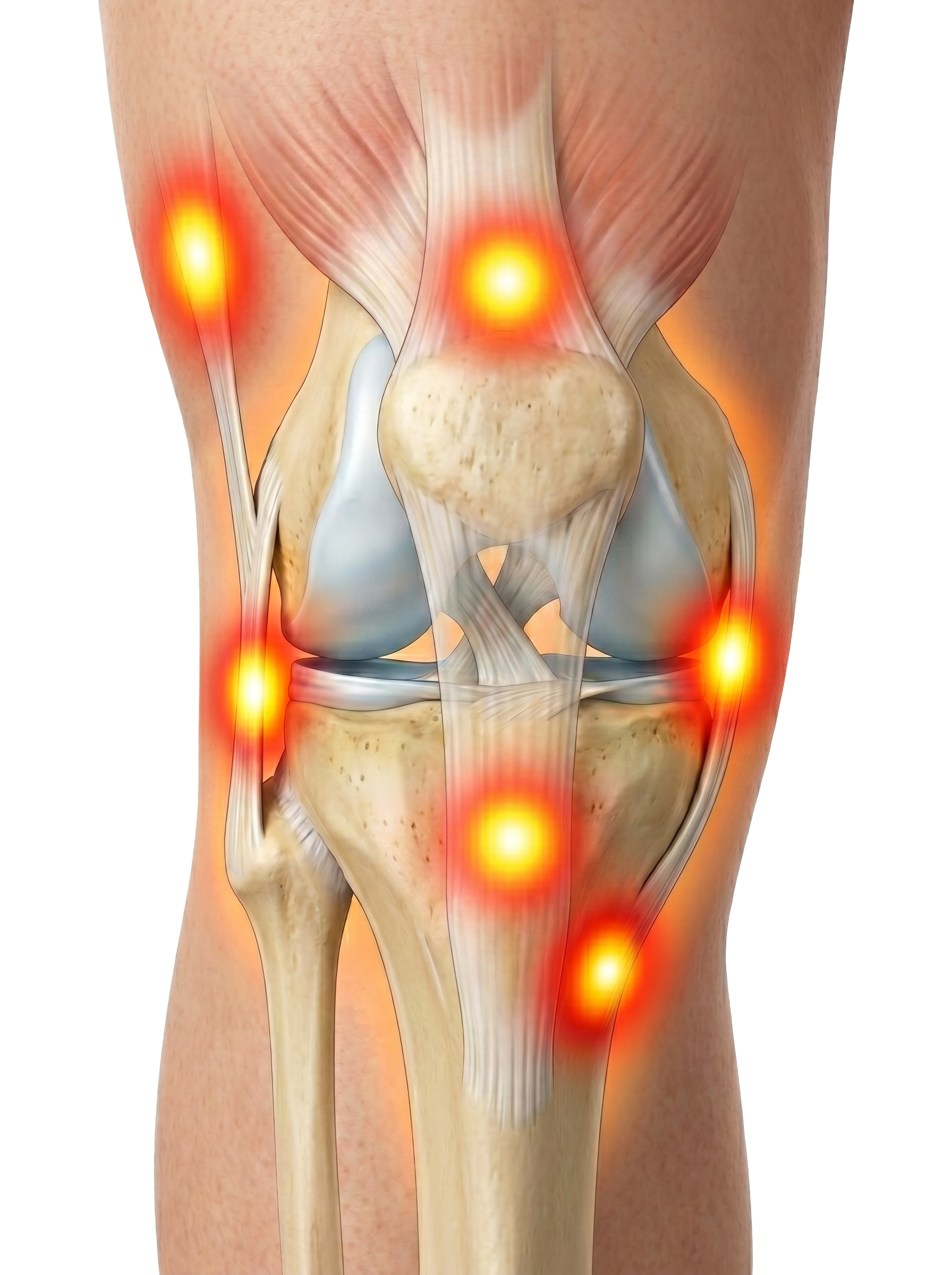
KNEE
Chronic knee pain, patellar pain, patellofemoral syndrome, IT band syndrome, and knee arthritis
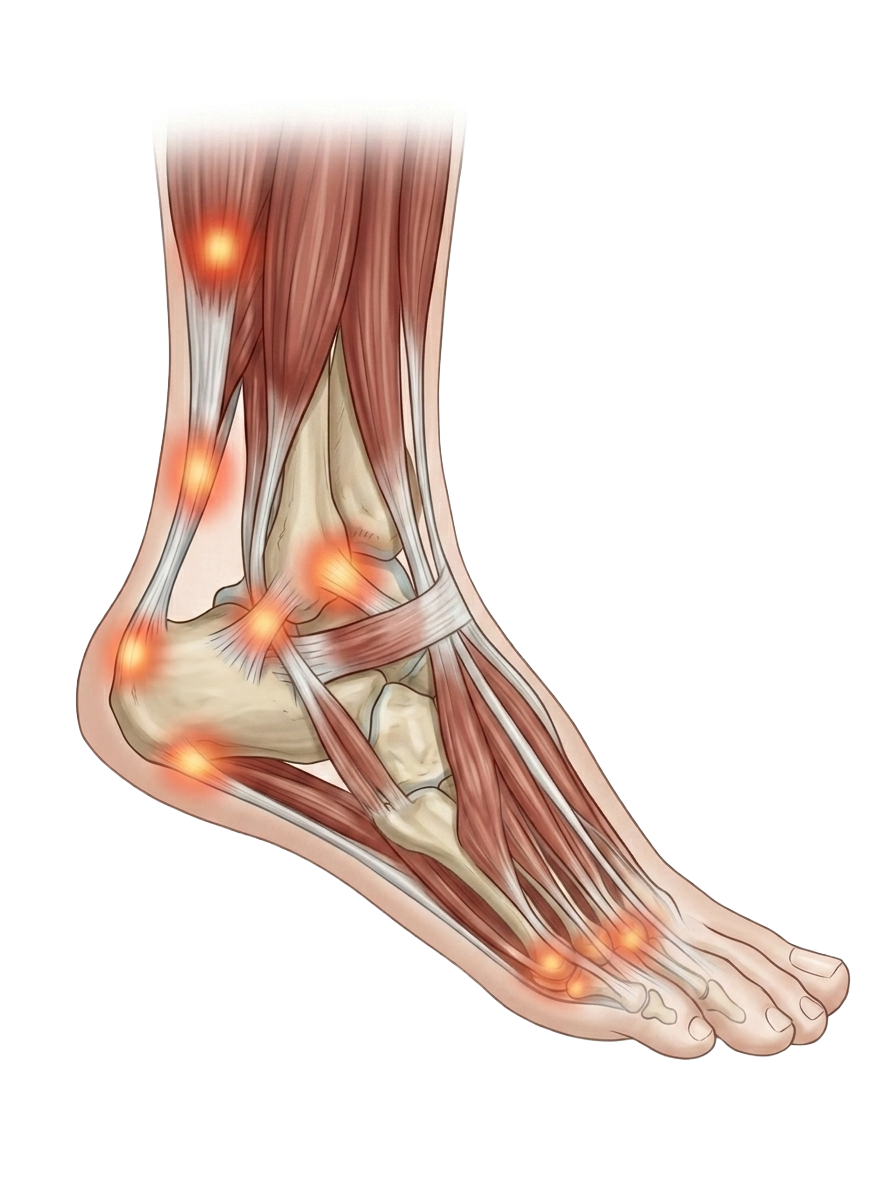
ANKLE
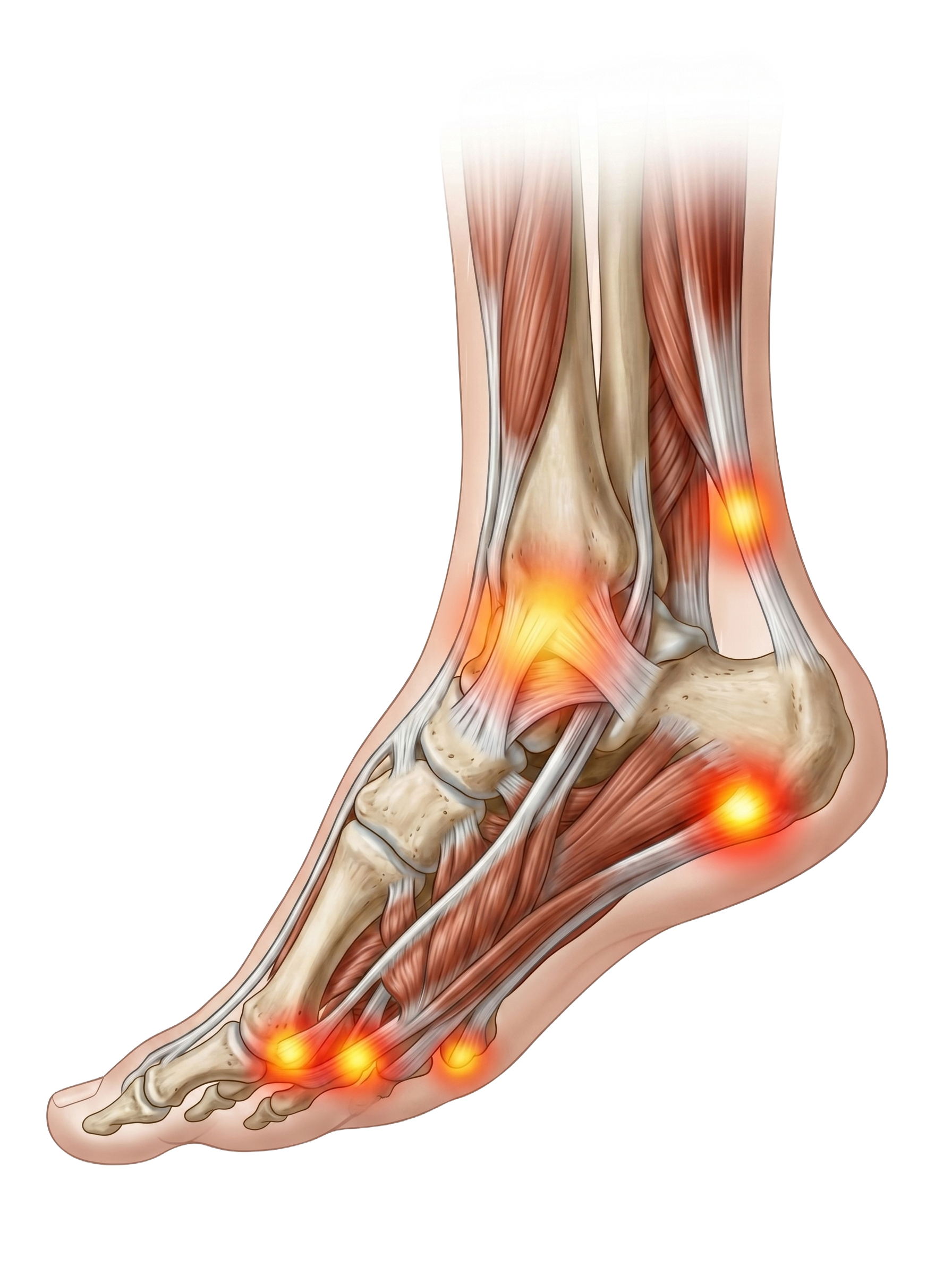
Chronic ankle pain, plantar fasciitis, metatarsalgia, achilles tendinopathy, recurrent ankle sprains and ankle instability
Is Prolotherapy Right for You?
Prolotherapy works best when the body has the foundation it needs to heal. The best candidates are active people dealing with musculoskeletal injuries or chronic joint pain, patients who have plateaued with conservative treatments like physical therapy, and anyone who is motivated to return to full function and committed to following the recovery protocol. If you can perform your daily activities independently, follow through with follow-up appointments, and tolerate injections, you are likely a good candidate.
Prolotherapy may not be appropriate if you have an active infection, are on blood thinners or anticoagulation therapy, are immunocompromised, are currently undergoing chemotherapy or treatment for active cancer, late stage degenerative joint disease, or have an injury that requires surgical repair such as a complete tendon or ligament rupture. It is also not the right fit if you are unable to avoid NSAIDs during treatment, cannot modify your activity level during recovery, or are looking for immediate pain relief. Prolotherapy is a process, not a quick fix.
What to Expect
During your initial visit, we will go over your symptoms, injury history, and movement patterns and perform a thorough musculoskeletal exam. If you have prior imaging, bring it so we can review it together. By the end of that visit, we'll have a clear picture of whether prolotherapy is the right path and what your treatment plan looks like.
A typical session begins with OMT to prepare the treatment area and optimize tissue mobility, followed by prolotherapy injections, and takes about an hour from start to finish. After the injection you can expect some soreness, heaviness, or tightness over the next 2 to 4 days, which is a good sign. It means your body's regenerative process has been activated. Activity will be modified during recovery and gradually reintroduced under my guidance.
Prolotherapy versus Cortisone injections
Cortisone Injections
Masks the symptom. Doesn't fix the problem.
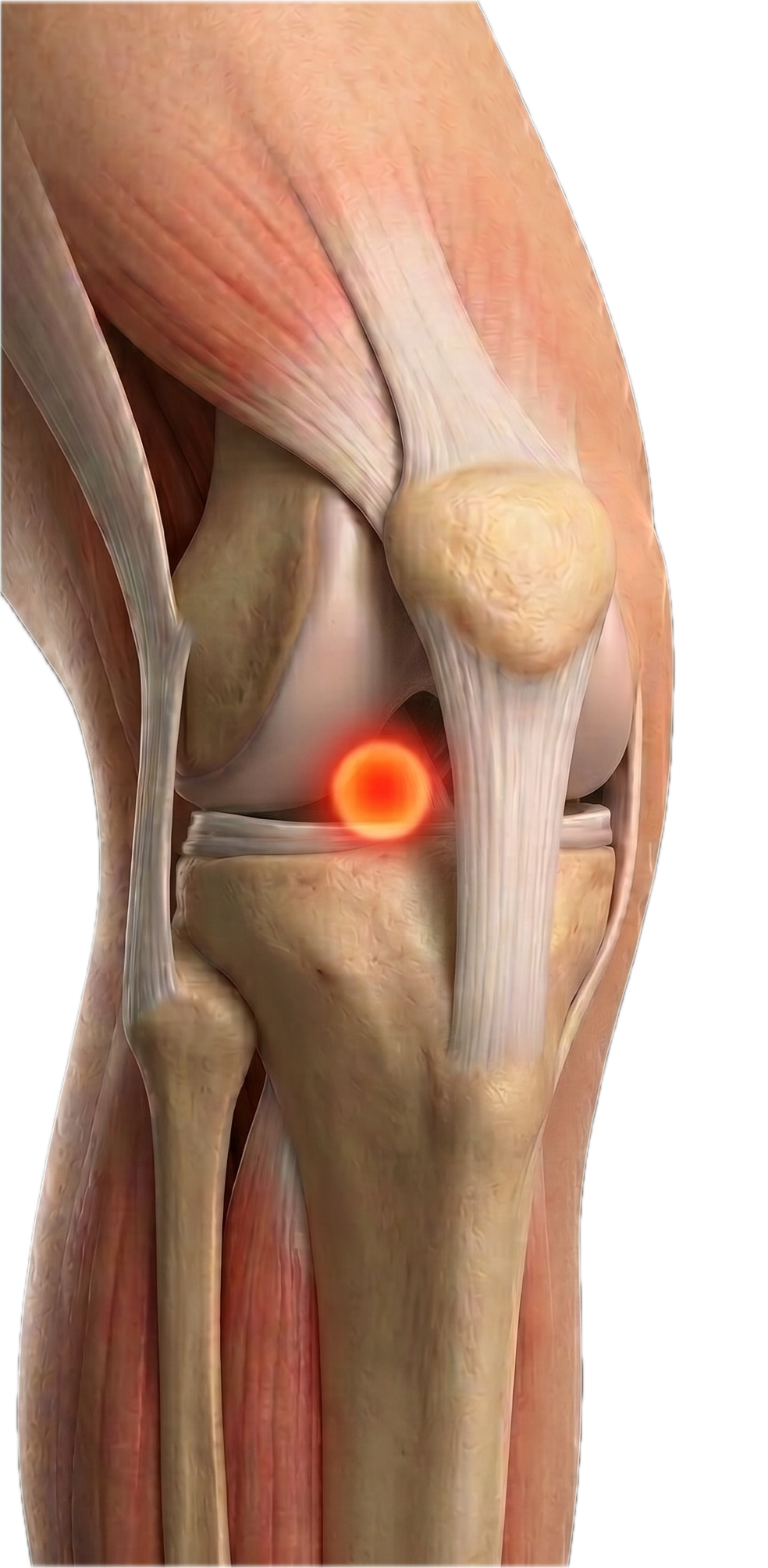
Cortisone is a steroid that works by suppressing inflammation. It can take the edge off of the pain, particularly from arthritis, and it does so quickly. But it doesn't rebuild anything. It goes into the joint space itself, not into the ligaments and tendons holding the joint together.
What the research shows over time:
Weakens surrounding ligaments and tendons
Thins the cartilage layer
May accelerate degenerative joint changes
Relief is temporary and does not address the root cause
Single injection site, into the joint space only
I do not offer cortisone injections. Quieting down pain without addressing what's causing it isn't a treatment, it's a delay.
Prolotherapy + OMT
Rebuild the structures. Restore the movement. Fix the cause.
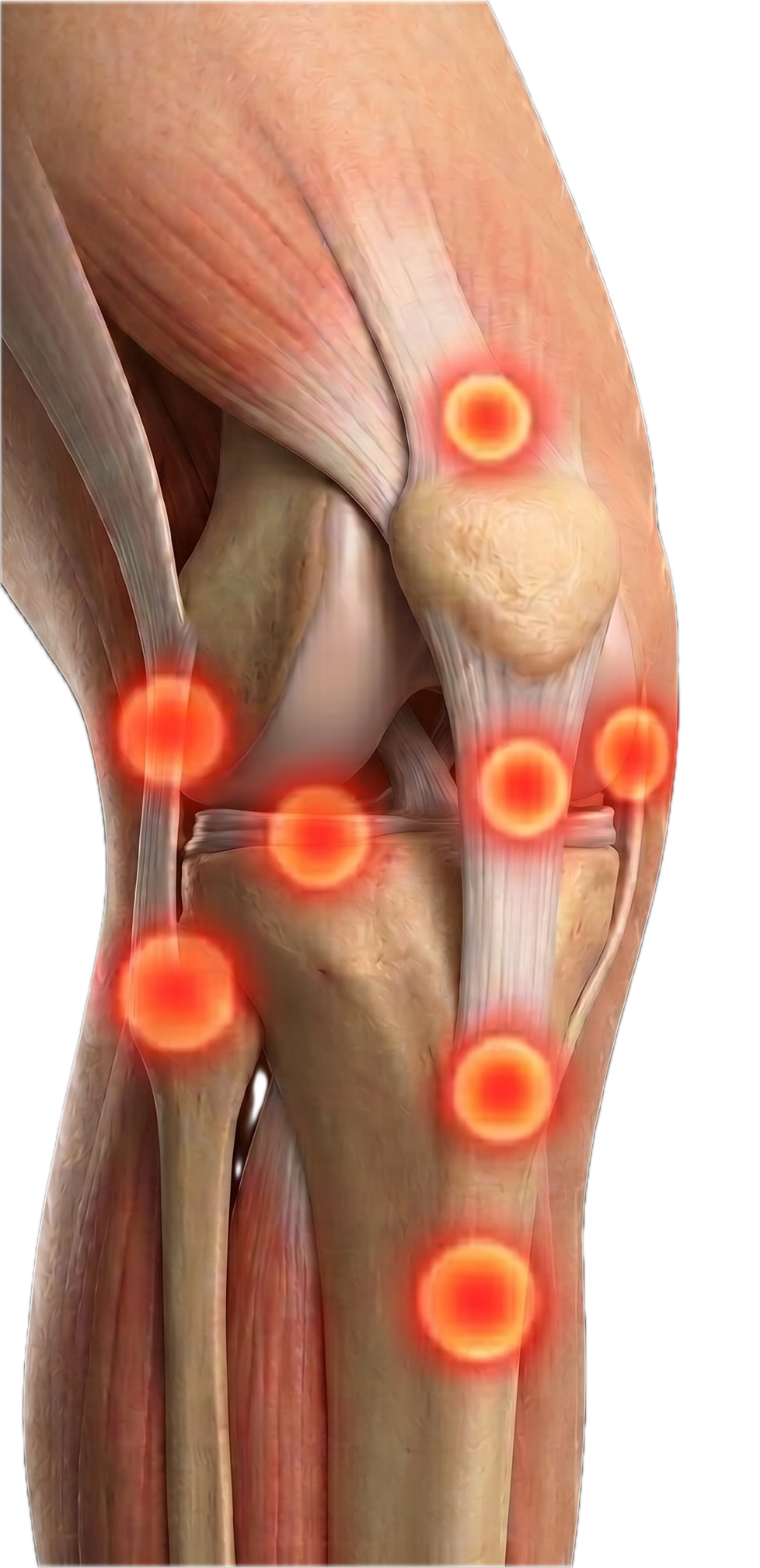
Prolotherapy injects the ligaments and tendons directly at their attachment points on the bone which is where instability actually lives. Before and after each session, osteopathic manipulative treatment (OMT) is used to restore how the joint moves and address the compensation patterns the rest of your body developed around the injury.
What makes this different:
Targets the ligaments and tendons, not just the joint space
Multiple injection sites to support the entire joint, not just where it hurts
Stimulates your body to rebuild collagen and strengthen support structures
OMT addresses how the whole body has been compensating. A bad ankle changes how your knee loads, which changes how your hip moves
No steroids, no surgery. Your body does the healing
Results that last months to years, not weeks
As an osteopathic physician, I am trained to look at the whole structure, not just the painful spot. I'd rather build something back up than mask it with a steroid.
Pricing
Initial consultation: $149 $199
Single treatment session: $385 $499
Repeat session: $349
3-session package (includes consultation): $975 $1375
Since prolotherapy works best as a series, this is the most common path. If you achieve full resolution before completing all three sessions, the unused sessions are refunded.
Prolotherapy is a cash-pay service. I do not participate with insurance, which allows me to spend the time each patient actually needs without rushed visits, or cookie-cutter care.
-
It would be a lie to say injections don't hurt. The level of discomfort depends on how inflamed the area is and the specific structures being injected. Lidocaine is used to minimize the pain, and most patients describe it as a tolerable ache rather than sharp pain. Post-injection soreness can last anywhere from 1 to 7 days.
-
One treatment starts the repair process, but the real benefit builds over a series. Most patients do 3 sessions spaced 2 to 4 weeks apart and notice meaningful improvement in pain and mobility by the end of the course.
-
Osteopathic manipulative treatment is a hands-on therapy that uses precise manual techniques to release tension, restore joint mobility, and improve how the body moves as a whole. As a DO, I use OMT before injections to make sure the joint is moving properly and the surrounding tissue is receptive to treatment, and after injections to support healing, address compensation patterns, and help the body integrate the structural changes that are taking place. Most patients find it as valuable as the injection itself and some come in for OMT alone.
-
NSAIDs (ibuprofen, Motrin, Advil, Aleve, naproxen) are anti-inflammatory medications. Since prolotherapy works by creating a controlled inflammatory response to trigger healing, taking NSAIDs during the process would directly counteract what we're trying to accomplish. They need to be stopped before and during the treatment course.
-
No. PRP uses growth factors concentrated from your own blood to stimulate tissue regeneration. Prolotherapy uses a dextrose-based solution to trigger inflammation and kick off the body's natural repair cycle. Both are regenerative in intent but work through different mechanisms and at different price points. There is no blood draw involved with dextrose-based injections.
-
No. These services are cash-pay. This allows me to give each patient the time, attention, and individualized care they deserve without the constraints of insurance-driven visits.
-
As with any injection-based procedure, risks include pain, bleeding, bruising, infection, and temporary worsening of symptoms. Serious complications are rare. We'll go over everything in detail during your consultation.
-
Most patients begin to feel a difference within 2 to 4 weeks of their first session, with continued improvement over several months as the tissue fully heals and remodels.
-
There is a substantial and growing body of evidence supporting prolotherapy for chronic musculoskeletal pain and joint instability. I am happy to walk you through the research during your consultation.
-
Cortisone suppresses inflammation for short-term relief but doesn't rebuild tissue. Over time, repeated injections can actually weaken ligaments, thin cartilage, and accelerate joint breakdown. Prolotherapy does the opposite. We use a controlled inflammatory response to signal your body to come in and repair the damaged structures. One manages the symptom. The other addresses the cause. I do not offer cortisone injections.
Frequently Asked Questions
Ready to Get Back to It?
If you've been dealing with joint pain, a nagging injury, or just a body that hasn't felt right since that one moment, prolotherapy might be exactly what you've been looking for. During your initial consultation we'll figure out together whether this is the right fit. Book your visit and let's get you moving again!